Every unforgettable customer experience starts with one person: the service agent. Whether they are answering a quick question, solving a complex problem, or calming a frustrated client, service agents sit at the heart of your brand promise. AI call center solutions in shaping remote workforces are helping these agents perform better by giving them real-time support, reducing repetitive work, and providing easy-to-understand insights to improve customer satisfaction.
AI is changing the way businesses operate across technology, marketing, and finance. For example, cloud-based AI systems for managing business operations allow teams to store and access data safely while working from anywhere. In marketing, AI tools for creating personalized online campaigns - marketingforcustomers help companies reach the right customers with the right message, improving engagement and boosting sales. AI also supports digital marketing strategies powered by artificial intelligence for better customer targeting, giving brands smarter ways to track trends and respond to customer needs.
In finance, AI simplifies complex tasks like automated financial management and smart budgeting tools, detecting fraud quickly, predicting cash flow, and helping companies make better financial decisions. By combining these technologies—cloud computing, AI-driven marketing, high-tech business tools, and finance automation—organizations create a seamless workflow that allows service agents to focus on helping customers instead of being bogged down by routine tasks.
When service agents are empowered with AI technology, trained to use modern tools, and supported by integrated systems across digital, marketing, and financial operations, they become a key driver of growth, customer loyalty, and brand reputation—showing clearly how AI call center solutions will define business growth in today’s fast-paced, technology-driven world.
Top 10 Contact Center Solutions for Service Agents
Providing excellent customer service starts with empowering your service agents with the right tools. AI contact center solutions are transforming the way agents work by delivering real-time guidance, automating routine tasks, and improving efficiency. Here’s a list of the top 10 contact center solutions you should consider:
1. Bright Pattern
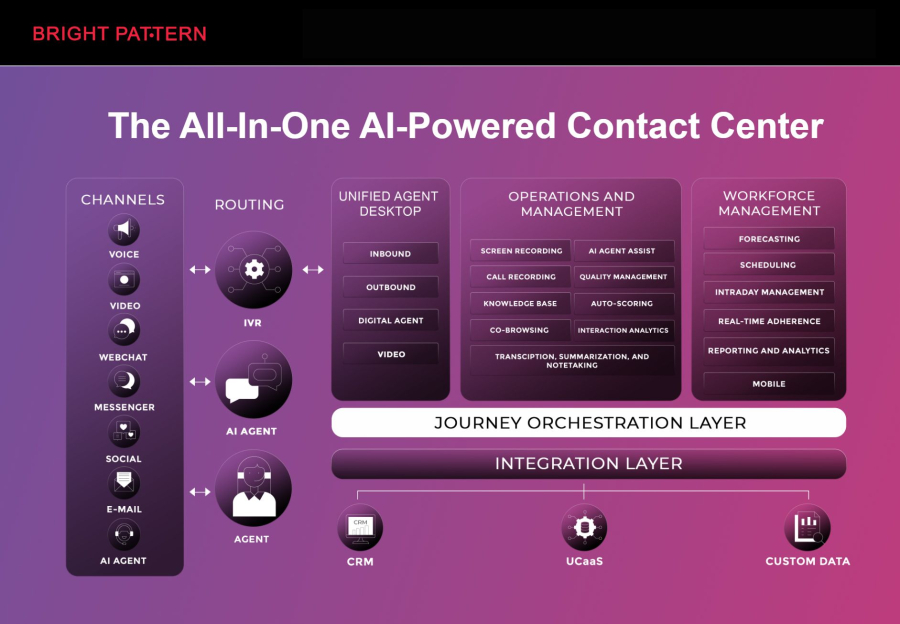
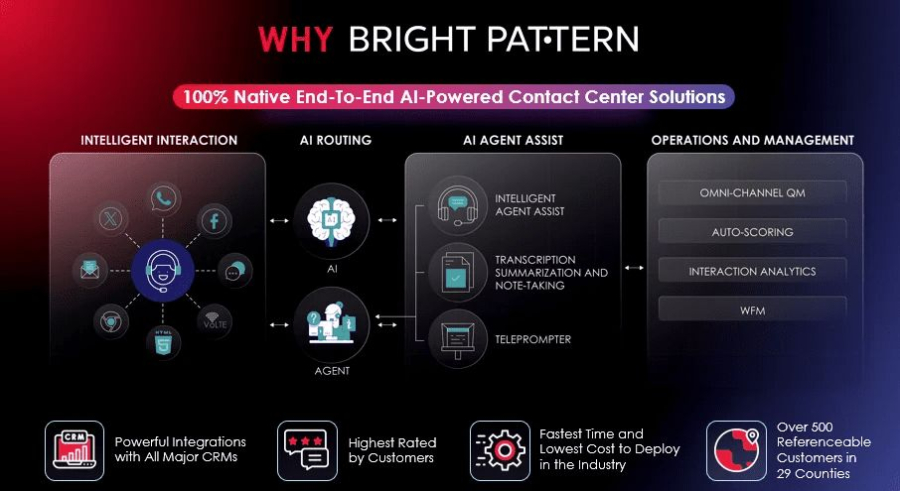
Bright Pattern is a leading AI contact center solution designed to streamline service agent workflows and enhance customer experience. With a cloud-native platform, it provides robust features for multichannel support, including voice, chat, email, SMS, and social media. Bright Pattern helps service agents focus on meaningful interactions rather than routine tasks.
Key features:
- AI-powered agent assistance for live conversations
- Omnichannel routing for consistent customer experiences
- Cloud-based platform with secure and scalable infrastructure
- Analytics and reporting tools for monitoring performance
- Integration with CRM systems for seamless workflows
Bright Pattern stands out for its ease of use, flexibility, and AI capabilities, making it ideal for organizations looking to modernize their contact center operations while keeping service agents efficient and satisfied.
2. Genesys Cloud CX
Genesys Cloud CX provides AI-driven solutions to optimize service agent performance. It offers predictive routing, workforce management, and customer journey analytics to improve response times and satisfaction.
3. Five9 Intelligent Cloud Contact Center
Five9 delivers cloud-based contact center software with AI-powered automation and virtual agents. It supports omnichannel communication and helps service agents resolve customer issues faster.
4. NICE inContact CXone
NICE inContact CXone integrates AI tools for quality management, analytics, and workforce optimization. It ensures that service agents have the resources and insights needed to deliver efficient support.
5. Talkdesk CX Cloud
Talkdesk CX Cloud offers AI-driven contact center solutions with real-time insights, workflow automation, and multichannel support. Service agents can leverage these tools to handle inquiries quickly and effectively.
6. Zendesk Talk
Zendesk Talk enhances service agent productivity with an integrated cloud-based contact center platform. Features include AI-powered ticketing, call routing, and analytics for better customer service management.
7. RingCentral Contact Center
RingCentral provides AI contact center solutions that improve communication efficiency for service agents. With multichannel support, predictive analytics, and automated workflows, agents can deliver faster resolutions.
8. Avaya OneCloud CCaaS
Avaya OneCloud CCaaS combines cloud technology with AI capabilities to provide service agents with intuitive tools for handling customer interactions, managing workflows, and analyzing performance metrics.
9. 8x8 Contact Center
8x8 Contact Center focuses on cloud-based solutions with AI-driven insights for service agents. It provides omnichannel communication, real-time analytics, and automation to improve customer engagement.
10. Cisco Webex Contact Center
Cisco Webex Contact Center leverages AI and cloud technologies to optimize agent efficiency, manage customer journeys, and deliver consistent omnichannel experiences.
What Is a Service Agent?
Aservice agentis a frontline professional who helps customers before, during, and after a purchase. They might work in a contact center, a retail store, a field service environment, or remotely from home, but their mission is always the same: make things easier, faster, and better for customers.
Service agents typically handle tasks such as:
- Answering questions about products, services, or policies
- Troubleshooting technical or account issues
- Processing orders, returns, and exchanges
- Guiding customers through onboarding or setup
- Escalating complex issues to specialists or supervisors
- Gathering feedback to help improve products and processes
In short, they are the human connection between your organization and your customers, turning policies and processes into real, relatable support.
Why Service Agents Matter More Than Ever
Today, customers have endless options and higher expectations. They compare every interaction with the best service they have ever experienced, regardless of industry. This makes your service agents a powerful differentiator.
When your agents succeed, you see clear, measurable benefits:
- Higher customer satisfactionthanks to faster, friendlier resolutions.
- Increased loyalty and retentionas customers feel genuinely valued and understood.
- More revenue opportunitiesfrom skilled agents who can identify needs and suggest relevant solutions.
- Stronger brand reputationas positive experiences turn into word of mouth and public reviews.
- Smarter business decisionsdriven by insights from frontline conversations.
In many organizations, a single memorable interaction with a great service agent is the reason a customer stays, upgrades, or recommends the brand to others.
The Core Responsibilities of a Modern Service Agent
Modern service agents do much more than answer calls. Their role has expanded into a blend of problem solving, relationship building, and customer advocacy.
1. Resolving Issues Efficiently
At the core of the role iseffective issue resolution. Customers want clear answers and quick solutions. Strong service agents:
- Ask targeted questions to understand the real root cause.
- Use tools and knowledge bases to find accurate solutions.
- Follow structured troubleshooting steps while keeping the customer informed.
- Confirm that the solution works before closing the interaction.
2. Creating a Positive Experience
Equally important is theemotional experience. People remember how an interaction made them feel. Successful agents focus on:
- Using a friendly, professional tone.
- Showing empathy, especially when customers are stressed.
- Personalizing the conversation instead of sounding scripted.
- Respecting the customer’s time with clear, concise communication.
3. Acting as the Voice of the Customer
Service agents see patterns long before they show up in reports. They recognize recurring issues, confusing policies, or product gaps. By documenting and sharing these insights, they become astrategic voice of the customerinside the business.
4. Identifying Opportunities, Not Just Problems
Well trained service agents do more than fix what is broken. They also:
- Spot chances to upsell or cross sell solutions that genuinely help.
- Suggest features, services, or plans better suited to the customer’s goals.
- Invite happy customers to share reviews or participate in feedback programs.
This turns each interaction into a potential growth moment, not just a cost of doing business.
Essential Skills of High Performing Service Agents
Behind every exceptional customer interaction is a set of well developed skills. Investing in these areas pays off in faster resolutions, happier customers, and more confident agents.
1. Communication and Active Listening
Great service agents are clear, concise, and attentive. They:
- Listen without interrupting, then summarize to confirm understanding.
- Avoid jargon and explain solutions in everyday language.
- Adapt their style to the customer’s personality and level of knowledge.
- Ask clarifying questions instead of making assumptions.
2. Empathy and Emotional Intelligence
Customers reach out when something matters to them. A strong service agent knows how to recognize and respond to emotions. They:
- Validate the customer’s feelings without taking comments personally.
- Stay calm and composed in tense situations.
- Show that they are on the customer’s side and committed to a solution.
3. Problem Solving and Critical Thinking
Scripts are helpful, but real situations are rarely identical. High performing agents:
- Think logically through symptoms to uncover the true issue.
- Use available resources creatively when the standard path does not work.
- Balance policy with practical judgment to find fair outcomes.
4. Product and Process Knowledge
Confidence comes from understanding. Service agents are most effective when they:
- Know the products or services in depth.
- Understand internal processes, from billing to returns.
- Stay up to date on new releases, promotions, and policy changes.
5. Time Management and Multitasking
Service environments are fast paced. Agents often juggle multiple systems, channels, and customers. Strong time management helps them:
- Handle interactions efficiently without rushing the customer.
- Prioritize urgent cases while managing ongoing follow ups.
- Maintain accuracy even under pressure.
Key Tools That Empower Service Agents
Modern technology allows service agents to deliver better results in less time. When the right tools are in place, agents spend less energy searching and more time helping.
|
Tool Type |
How It Helps Service Agents |
|
Customer relationship management (CRM) |
Gives agents a complete view of the customer’s history, preferences, and past interactions. |
|
Ticketing or case management |
Organizes requests, tracks status, and prevents issues from being lost or duplicated. |
|
Knowledge base |
Provides step by step guides, FAQs, and solutions agents can quickly search and share. |
|
Omnichannel platform |
Lets agents support customers across phone, email, chat, and social channels from one place. |
|
Quality and coaching tools |
Offer call or chat reviews, scorecards, and feedback to help agents grow their skills. |
When these tools are integrated and easy to use, service agents can focus on what they do best: building strong, lasting relationships with customers.
Business Benefits of Investing in Service Agents
Every investment in your service agents improves more than the support function. It creates ripple effects across the entire business.
1. Turning Support Into a Revenue Driver
Well equipped agents do not just reduce complaints; they create opportunities. By understanding customer goals and challenges, they can suggest:
- Upgrades that solve a recurring problem.
- Complementary services that add value.
- Plans that better match actual usage and needs.
This approach feels helpful, not pushy, and often leads to higher average order values and stronger long term relationships.
2. Reducing Churn and Retention Costs
Replacing a lost customer is far more expensive than keeping an existing one. Service agents play a direct role inreducing churnby:
- Recovering at risk customers when issues arise.
- Providing timely answers during key moments, such as onboarding.
- Creating loyalty through consistent, caring interactions.
3. Strengthening Brand Trust
Marketing creates expectations; service agents either confirm or challenge them. When your support team consistently delivers, customers learn that they can trust your brand to stand behind its promises. That trust fuels:
- Positive reviews and referrals.
- Higher tolerance for the occasional mistake.
- Willingness to try new products or services from your brand.
Building and Supporting a High Performing Service Agent Team
A great customer experience is not an accident. It is the result of thoughtful hiring, training, and ongoing support for your service agents.
1. Hiring for Attitude and Potential
While technical skills can be taught, personality traits are harder to change. When recruiting service agents, many organizations prioritize:
- Empathy and patience.
- Curiosity and willingness to learn.
- Resilience in the face of challenges.
- Clear, confident communication.
2. Providing Comprehensive Onboarding
Effective onboarding goes beyond product training. It should also include:
- An introduction to company values and customer promises.
- Shadowing experienced agents and practicing real scenarios.
- Hands on time with tools, systems, and knowledge bases.
- Clear performance expectations and success metrics.
3. Investing in Continuous Training and Coaching
Customer needs, products, and processes all evolve. Ongoing development keeps service agents confident and motivated. This can involve:
- Regular product and policy updates.
- Workshops on soft skills such as de escalation or rapport building.
- One on one coaching based on call or chat reviews.
- Opportunities to grow into senior, specialist, or leadership roles.
4. Creating a Supportive Work Environment
Service work is rewarding, but it can also be intense. Organizations that retain top talent usually:
- Provide clear processes and easy to use tools.
- Encourage teamwork and knowledge sharing.
- Recognize and celebrate great customer stories.
- Offer realistic workloads and opportunities to recharge.
Measuring the Success of Service Agents
To understand the impact of your service agents, it helps to combine quantitative and qualitative indicators. Key metrics often include:
- First contact resolution (FCR)– How often issues are fully resolved in the first interaction.
- Customer satisfaction (CSAT)– How customers rate their experience right after interacting with support.
- Net promoter score (NPS)– How likely customers are to recommend your brand based on their overall experience.
- Average handling time (AHT)– How long interactions typically take, balanced with quality.
- Quality scores– Internal evaluations of accuracy, compliance, and soft skills.
Combined with customer comments and frontline feedback, these metrics highlight where your agents shine and where additional support or training can bring even better results.
Future Trends Shaping the Service Agent Role
The role of the service agent continues to evolve as technology and customer expectations change. Several trends are shaping the future:
- More complex, higher value interactionsas simple questions are handled by self service options, leaving agents to focus on nuanced cases.
- Greater emphasis on personalizationusing customer data to tailor recommendations and solutions.
- Closer collaboration across departmentsso agents can solve issues that span sales, billing, and technical teams.
- Expanded career pathsfrom frontline roles into quality, training, operations, and customer experience leadership.
In this environment, investing in your service agents is not just about today’s tickets. It is about building a flexible, customer centric organization that can grow and adapt.
Conclusion: Service Agents as Strategic Allies
Service agents are far more than a cost center or a support function. They are relationship builders, problem solvers, and advocates for both the customer and the business. When they are trained, empowered, and equipped with the right tools, they turn everyday interactions into powerful moments of trust and loyalty.
By recognizing the strategic value of your service agents and investing in their growth, you unlock a significant advantage: customers who feel heard, helped, and genuinely cared for at every step of their journey.
